

In this article
“We need more leads” is one of the most common briefs in marketing, and often the wrong one. It assumes the problem is at the top, with not enough people coming in, when the real leak is frequently further down. The right people are arriving and then quietly leaving, or the wrong people are arriving and taking up everyone’s time. Pour more volume into either and you just get more of the same problem.
The word changes from one organisation to the next. A law firm wants enquiries, a showroom wants bookings, a recruiter wants applications, a charity wants donors. Underneath, the brief is the same, and so is the trap.
Three problems that sound the same
Before accepting “more leads” as the goal, it’s worth asking what is actually broken, because sometimes you need better enquiries rather than more of them, or simply to stop losing the good ones you already get.
| What it feels like | What is often happening | Where the fix usually sits |
|---|---|---|
| Not enough enquiries | Too few of the right people ever find you | Reach: search, PR, paid campaigns and partners, aimed at the right people |
| Plenty of visits, few enquiries | The right people arrive, then quietly leave | Clarity, and an enquiry journey people can finish |
| Plenty of enquiries, few customers | The wrong people arrive, or good ones go cold | Positioning, plain qualifying questions, faster follow-up |
Only the first row is a volume problem. The other two get worse when you add volume, because more people meet the same obstacle.
Walk the whole path
Follow the route a stranger takes to become a customer, and find where it actually breaks, answering each question with evidence rather than a hunch.
- 01Are enough of the right people arriving?
That means the people you could actually serve, finding you at the moment they are looking, rather than visitors in general.
- 02Do they understand you when they get there?
Within a few seconds, a newcomer should be able to tell what you do and whether it’s for them.
- 03Does the enquiry journey work?
Count the steps from interest to contact on a phone, remembering that each one loses a few people.
- 04Are the leads the kind you can close?
Ask whoever takes the calls, because they know which enquiries were never going to fit.
- 05What happens after they get in touch?
A good enquiry answered slowly, or not at all, is lost as surely as one that never arrived.
The constraint is usually one specific link in that chain, and fixing it does more than lifting volume everywhere.
Your analytics will show where people leave but not why, and for that you have to talk to people: the customers who chose you, the ones who nearly did, and the team who answer the phone. Asking first and only then deciding what to build is the heart of human-centred design.
A brief that sounded like volume
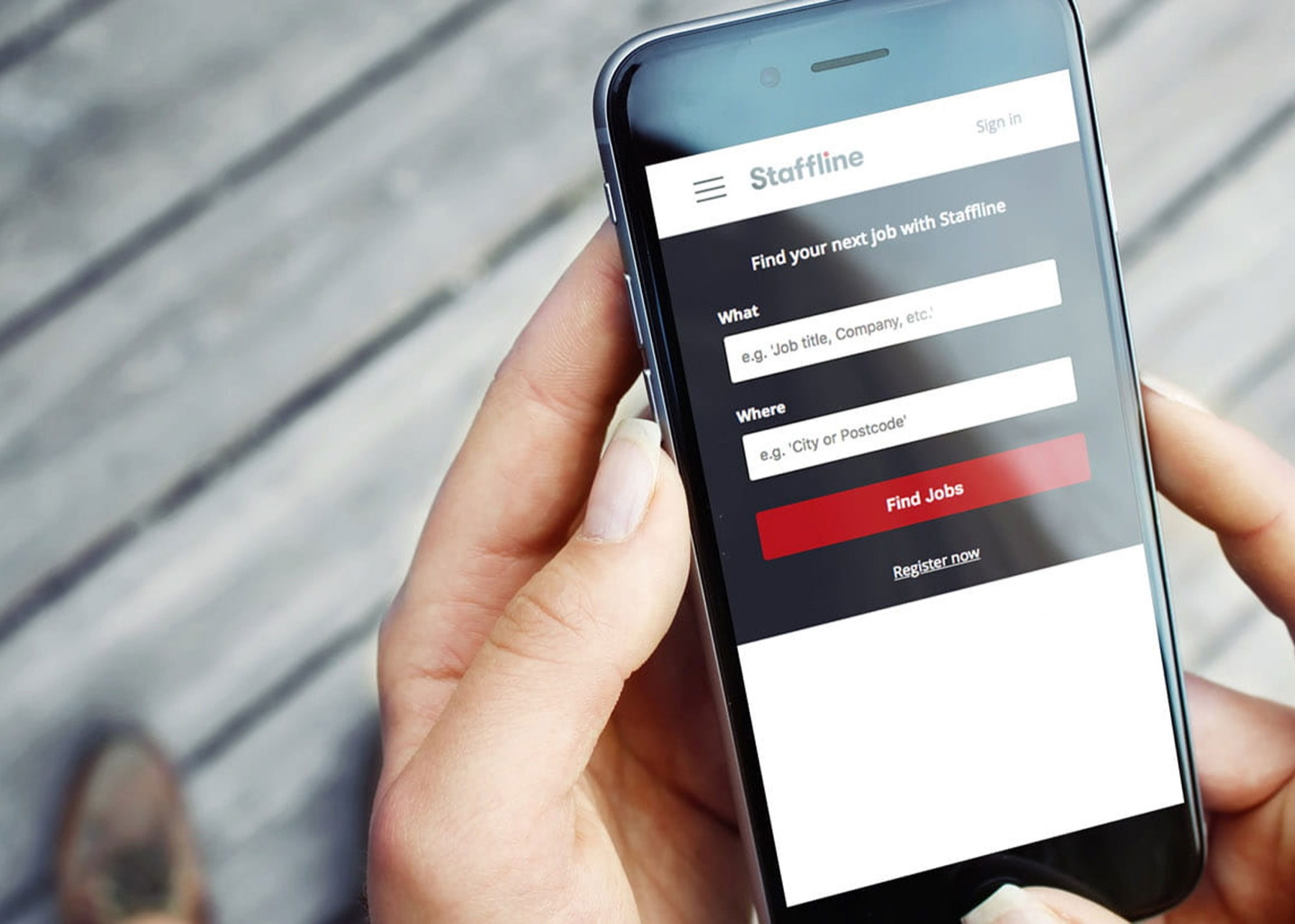
Staffline, the largest provider of blue-collar recruitment in the UK, was finding it increasingly difficult to source candidates to meet the peaks and troughs of demand. On the face of it, that is a volume brief.
Our first analysis found something more specific. Problems with how the software was integrated meant the job adverts were barely optimised online, so candidates struggled to find jobs through search engines. The job search itself was flawed and cumbersome, so candidates who did find a job then struggled to apply. Spending more on attention would have fixed neither of those broken links. Even the part that looked like a reach problem came down to how the technology was put together.
So the work was a total overhaul of the site and the technology behind it, shaped by a six-week audit of data and competitors and by workshops with clients and candidates. The results also shaped an SEO strategy aimed at competitors with a similar offer and a similar presence online. The new site put the job search first and mobile first, with a streamlined way to register and apply, and simple icons for browsing by sector or industry.
Their consultative approach unveiled to us a multitude of improvements we could make to our digital strategy.
Volume hides the leak
More volume can mask a broken path for a while. Enough extra enquiries squeeze through that the numbers look fine, so the real problem never gets fixed and the cost of every customer keeps climbing.
More leads is an answer, but the better question is which part of the journey is actually losing you business.
If your contact page loses most of the people who reach it, doubling the traffic doubles the people it loses. An organisation that fixes the constraint first, then adds volume, gets far more from the same spend than one that reaches for volume to paper over the leak. There’s more on two of these leaks in the real cost of a confusing website and designing an enquiry journey people finish.
When more attention really is the job
None of this means volume never matters. When the rest of the path works and too few of the right people know you exist, reach is the right brief, as long as it is aimed.
Rushton Ablett had made jelly shoes since the 1980s. When retro came back into fashion after a lull, the company wanted a strong new brand to make the most of the new demand. For Juju, attention really was what the brand needed, though not from everyone. Young women aged 16 to 25 came first, reached through social pages, online radio and a festival roadshow in an ice-cream van turned Juju-mobile. Retailers and boutiques came second, through events, PR, advertising and point of sale.

Pure Resourcing Solutions shows the other half. The East Anglian recruitment consultancy had a strong brand and a great local reputation for each of its offices, but no real digital presence, so reach was a fair brief. We built the website and digital strategy, with a social media strategy and a launch competition to drive traffic. We also joined the site to Pure’s back-office software, so consultants received relevant live CVs directly, and an automated response system cut the admin, so the new attention arrived somewhere ready for it.
What to brief instead
Treat “more leads” as a symptom to diagnose rather than a brief to accept, and write a brief that names the link you think is broken and the evidence that makes you think so.
The last one really is about reach, which is fine, because like the others it tells whoever picks it up where to look first.
Sometimes the most valuable thing a marketing partner can do is tell you that leads aren’t your problem. If a second pair of eyes would help, our free marketing audit reviews your website and marketing and comes back with three things you could fix this month. No pitch, no tie-in. When the answer runs wider than one fix, that is where marketing consultancy comes in. We’re happy to talk it through whenever suits.
Common questions
How do I know whether we have a volume problem or a conversion problem?
Put three numbers side by side for the same few months: visits to the pages that matter, enquiries and new customers. If every step holds up and the first number is simply small, it’s reach. If one step drops sharply, start there. Analytics gives you the first two numbers, and whoever takes the calls can tell you about the third, and often why.
What should a marketing partner ask before taking a lead generation brief?
Where enquiries come from now, how many become customers, where the good ones drop out, and what the people taking the calls say about the ones that don’t fit. If someone quotes a cost per lead before asking any of that, it’s fair to ask why.
Do donors, volunteers and applicants follow the same path?
Yes. Before buying more attention, check that the people who already care can give, apply or sign up without giving up halfway.