
In this article
In the healthcare businesses we work with, from rehabilitation and case management to occupational health and expert witness services, the buyer is rarely the patient. It is an insurer, a solicitor, an HR director or a case manager, choosing a provider on behalf of someone else.
That changes what trust has to do, because whoever chooses carries the outcome for another person, and their own reputation with it. They choose on expertise, on relationships, and on confidence that you will deliver what they have put their name to.
What follows draws on two studies we ran for HCML and Bush & Co, in which we interviewed the people who recommend and buy the service before designing anything. We are not clinicians, and two studies are not a whole sector, but they pointed the same way.
What the people who choose told us
For HCML, a provider of rehabilitation, case management, occupational health and workplace wellbeing, we interviewed the intermediaries who recommend and buy its corporate health services. For Bush & Co, who provide case management and expert witness services for catastrophic injury, we interviewed the solicitors and insurers who choose them. Between them, the two studies turned up six findings.
| What we heard | Study |
|---|---|
| Relationships are everything, and intermediaries rely on suppliers to deliver and to validate what they recommend to their clients | HCML |
| They hunt constantly for credible content to share onward, and turn overwhelmingly to LinkedIn to find it | HCML |
| They want to hear from a provider all year round rather than be bombarded, and real stories land harder than messaging built around services | HCML |
| Case managers were king, and relationships were built on the quality and personality of the consultant first | Bush & Co |
| Finding the right consultant had to be simple, and solicitors searched by geography before anything else | Bush & Co |
| Solicitors were cautious by nature, and needed a push to try someone new | Bush & Co |
Two clients, two studies, and the same lesson underneath.
The buyer wants to find the right person quickly and to trust them before picking up the phone.
Everything below follows from that sentence. Where several people inside the buyer have a say, healthcare marketing and the buying committee covers how to give each of them the proof they need. Here the focus stays on the person whose name goes on the referral.
The brand: show the people behind the expertise
In both cases the identity had to convey expertise and integrity while showing the people behind it. For Bush & Co, a new senior management team wanted a brand in line with its ambitions and values. We created new brand values and a positioning statement before any creative concepts, and the identity that followed uses the symbol of a face and an eye for focus, kindness and wisdom.
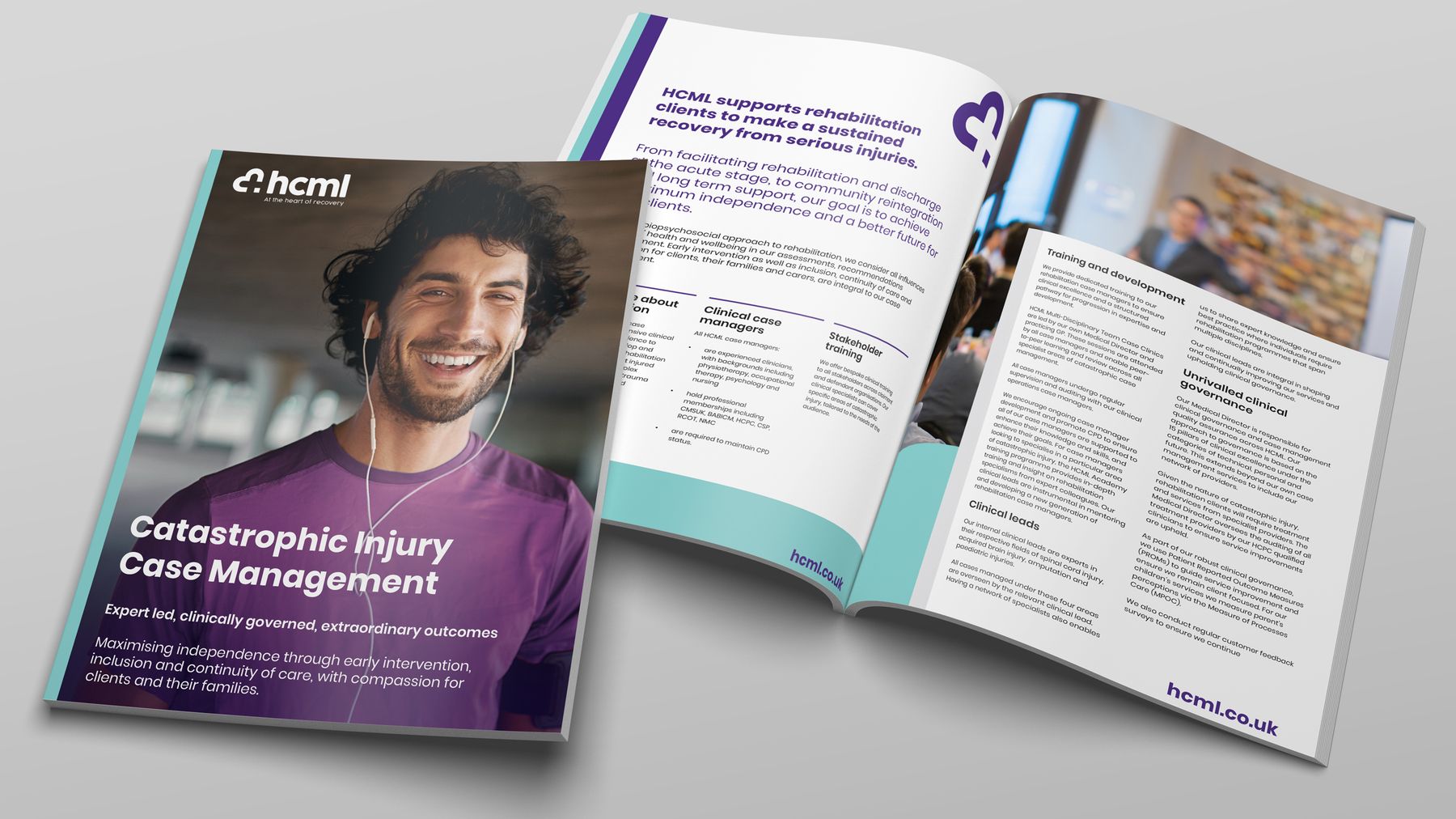
HCML’s name was already well established, so the work lay in sharpening the identity, the positioning and the straplines, and making every touchpoint consistent. If you are weighing whether to keep a respected name, rebranding without throwing away what already works goes into how to decide.
Our view is that a cautious buyer reads your brand as early evidence of how carefully you work. A brand that looks unsure of itself gives them one more reason to stay with who they know, while one that looks considered and shows real people takes that reason away. That is what brand identity has to do here.
The website: make the right person easy to find
Bush & Co’s solicitors searched by geography first, and on HCML’s rehabilitation side insurers and solicitors choose by location and specialism first. In both cases the buyer was looking for a person, so for both we built a finder.
HCML’s finder lets insurers and solicitors filter its case managers by location, profession, specialism and region, then shortlist. Bush & Co’s is built on a map, where solicitors filter by specialism, geography and experience, shortlist, download CVs and save their searches. Both came directly from what the buyers said.
A finder isn’t the answer for everyone, though, and if your buyers choose some other way, the website should follow that instead.
Routes matter too. HCML’s rehabilitation side supports insurers, solicitors and the public sector, its corporate health side serves employers, and its website’s menu leads with those two sides. If you sell to more than one kind of buyer, don’t make them work out which half of the site is theirs, which is why a website redesign should start from how your buyers search rather than from how you are organised inside.
The proof: something they can check and pass on
HCML’s intermediaries told us they rely on suppliers to validate what they recommend to their own clients, and that they hunt for credible content to share onward. So your proof has to work for their client as well as for the person choosing, once it has been forwarded with their name on it.
For HCML, those findings shaped a year of content and communications built around ethical, behavioural nudges rather than a burst of campaigns: a LinkedIn calendar, segmented email programmes, landing pages and lived experience storytelling.
Every claim should trace to your own material, your experts or a named source. Social proof that works covers which kinds of proof a careful buyer believes, where to put them, and why a figure needs its period, baseline and source.
The people: the relationship is the service
Bush & Co’s solicitors and insurers told us case managers were king, and HCML’s intermediaries said relationships are everything. In services like these, your people are what the buyer is choosing, so the people side can’t be a team page added at the end.
Show your people properly, because a name and a job title is not enough for someone about to recommend that person to a client. Give their experience, their specialism and where they work, in the terms a referrer uses to choose. For Bush & Co, we reviewed the consultants’ CVs to bring their experience and expertise to life.
Let your experts shape the words, too. The expertise sits with the people doing the work, so we interview a provider’s clinical and subject-matter experts as part of the research and involve them in the messaging, so that the result is something they would say themselves.
Then make sure the story holds up in person. For both clients we made info packs, presentations and an exhibition stand that tell the same story as the website, and there is more on that in pitch decks and sales tools.
Where to start
You can begin without a rebrand or a new website.
- 01Ask the people who choose
Talk to a few insurers, solicitors, HR contacts or case managers who referred to you recently, and one or two who went elsewhere.
- 02Note how they search
Whether they search by place, by specialism or for a named person, your website should start where they start.
- 03Read your people pages as a referrer
Is there enough on each one to recommend that person to a client?
- 04Run the forwarding test
Try it on your last few posts, pages and brochures, and keep what passes.
- 05Check it all says the same thing
Lay the website, the deck, the info pack and the stand side by side.
What good discovery actually looks like covers how to run those first conversations.
Starting with the people who choose is human-centred design in practice. Our healthcare page shows how it has played out for providers like these, and we are happy to talk it through.
Healthcare is one of several sectors we work in, and the method is the same in each.
Common questions
Does this apply to occupational health, where the buyer is an employer?
Partly, and it is worth checking. HCML’s corporate health side, which includes occupational health, sells to employers, and our study for it was with the intermediaries who recommend and buy those services. Your own buyers may weigh things differently, so ask them.
What about expert witness services?
Bush & Co provides expert witness services as well as case management, and our study did not split the two: we interviewed the solicitors and insurers who choose Bush & Co. So we can’t say whether people choosing an expert witness weigh things differently, and it is worth asking yours. On the website we built, the expert witness profiles emphasised past successes.