
AI readiness review that finds where AI will help before you spend
Ideate Partners’ AI readiness review is a fixed first step. In about three weeks we look at your people, work, data, tools and rules, and you leave with a ranked list of uses and a 90 day plan.
What is an AI readiness assessment?
An AI readiness assessment checks whether an organisation’s people, work, data, tools and rules are ready for AI, and finds where AI would add most value first. It ends with a short list of uses worth doing, the gaps to close, and the order to tackle them in.
Who it’s for
- 01
You know AI matters, but not where it fits
You’ve tried a tool. You want to know what AI would do for your organisation, specifically.
- 02
AI is already in use, unofficially
Staff use free tools on their own accounts. You’d like to know what, and make it safe, without losing the goodwill.
- 03
You’re about to buy licences
Before you sign for AI seats for everyone, find out what they’d be used for, and by whom.
- 04
You need a plan you can defend
Directors, trustees or a funder want something specific and evidenced, not a vision.
The six areas we look at
Six areas, from the ground up. Each rests on the one below: a tool is only as good as the data it can reach, and data only matters for the work it serves.
- 06
How success will be measured
The before figures, and what would count as working.
- 05
Rules and risk
What may go into which tool, who checks output, what the law asks.
- 04
Tools already in use
Licensed and unofficial, including free accounts on phones.
- 03
Data and where it lives
Documents, systems and inboxes, and who can reach them.
- 02
The work and where time goes
The repeated tasks that fill each team’s week.
- 01
People and skills
Who uses AI now, who’s wary, and who could lead it.
How it runs
About three weeks from start to finish, and around a day of your people’s time in all.
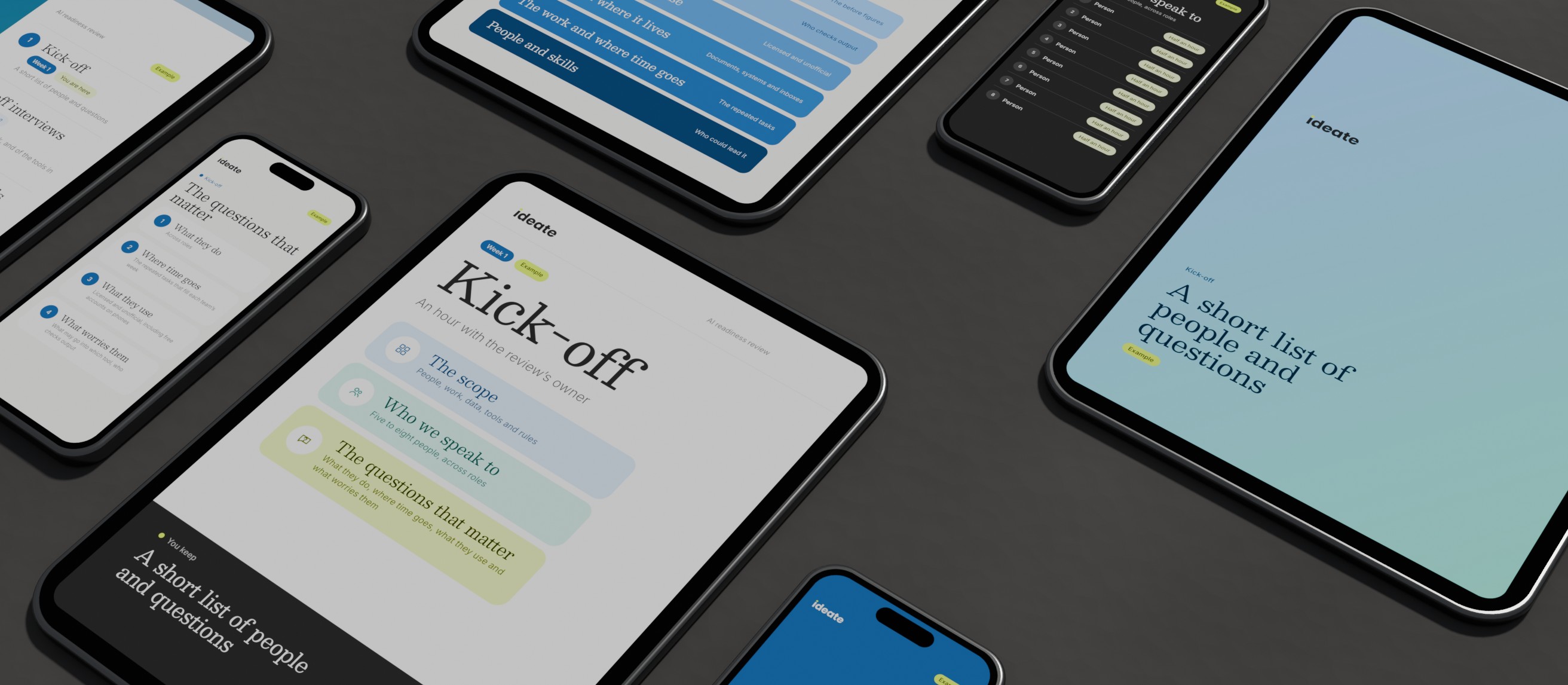
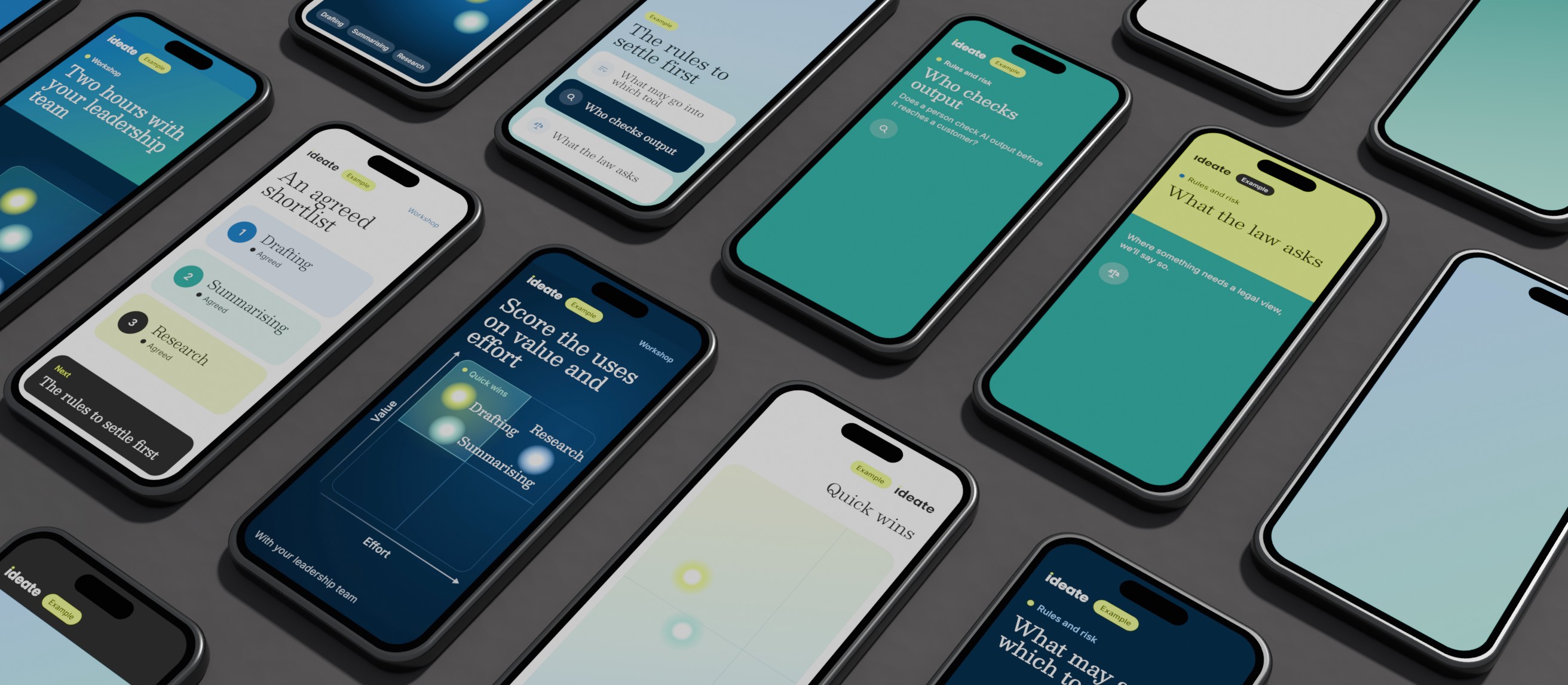
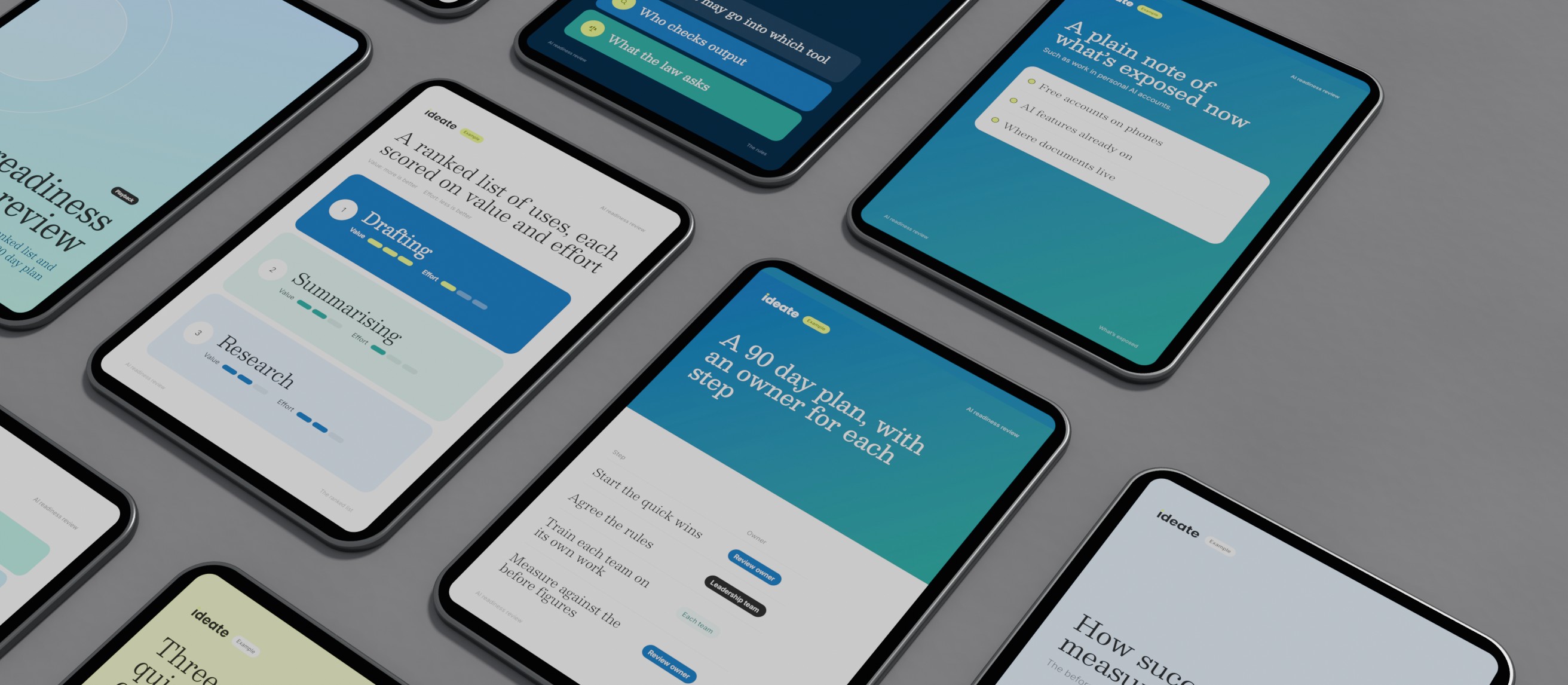
01Week 1Kick-off: An hour with the review’s owner to agree the scope, who we speak to and the questions that matter. You keep: A short list of people and questions.
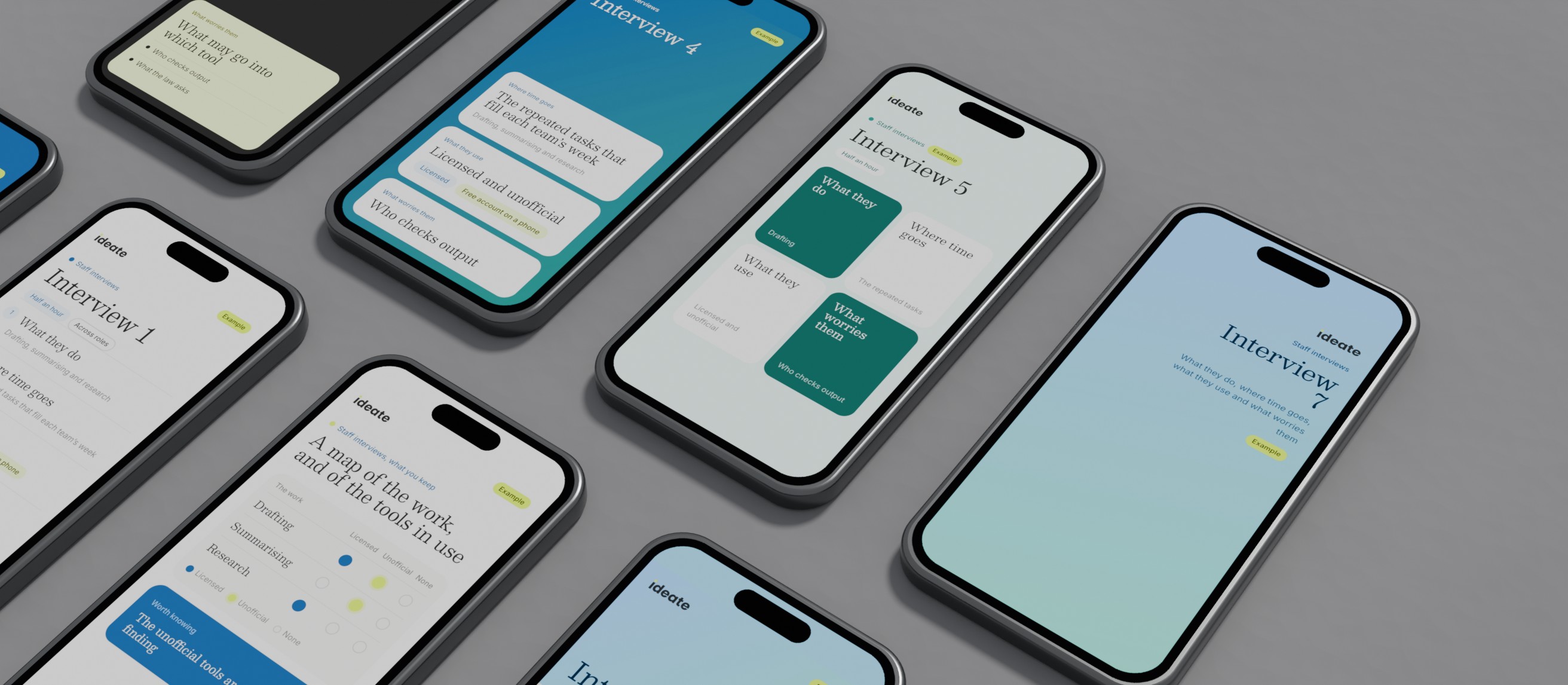
02Weeks 1 to 2Staff interviews: Half-hour conversations with five to eight people across roles: what they do, where time goes, what they use and what worries them. You keep: A map of the work, and of the tools in use.
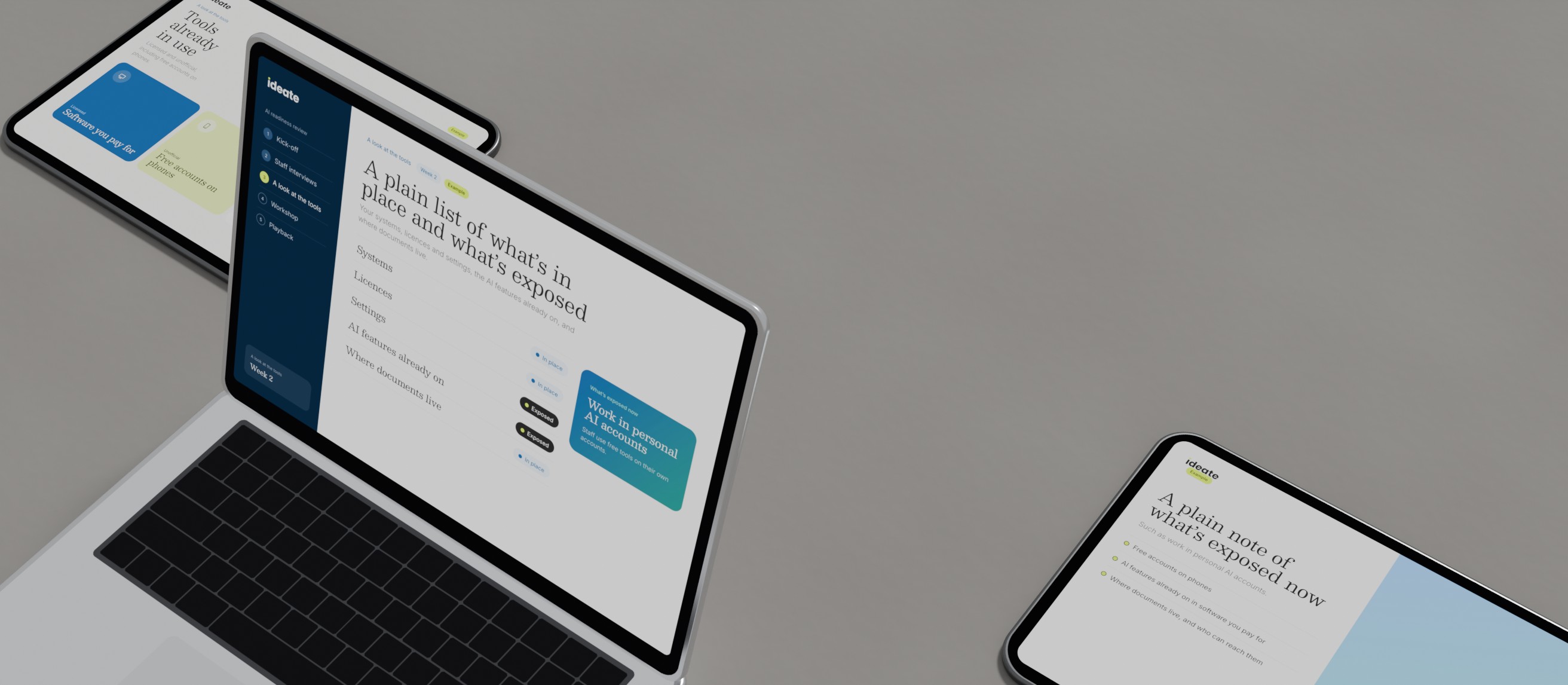
03Week 2A look at the tools: Your systems, licences and settings, the AI features already on, and where documents live. You keep: A plain list of what’s in place and what’s exposed.
04Week 3Workshop: Two hours with your leadership team to score the uses on value and effort, and pick the rules to settle first. You keep: An agreed shortlist.
05End of week 3Playback: We take you through the findings and the plan, and leave you a written copy. You keep: The ranked list and the 90 day plan.
Are you ready for AI? A self-check
Twelve questions to answer on your own. Yes or no, and be honest: nobody’s marking it.
Nine or more yeses: you’re ready to pilot. A no on knowing the tools, the written rule or the person checking: start with the rules this week, as unofficial use is already happening. A no on the tasks, asking staff or timing the task: start with the work, not the tools. A no on training is common: ONS found only 11% of businesses with 10 or more employees said more than half their workforce had received AI-related training (June 2026).
What you leave with, and what it isn’t
Included
- A ranked list of uses, each scored on value and effort
- Three to five quick wins you can start the following week
- The rules to agree before anyone is trained
- A 90 day plan, with an owner for each step
- A plain note of what’s exposed now, such as work in personal AI accounts
Not included
- A software sale: we recommend tools, we don’t resell them
- A technical security audit or penetration test
- Legal advice: we’ll say where you need a lawyer
- A score out of 100
We’ve always started this way
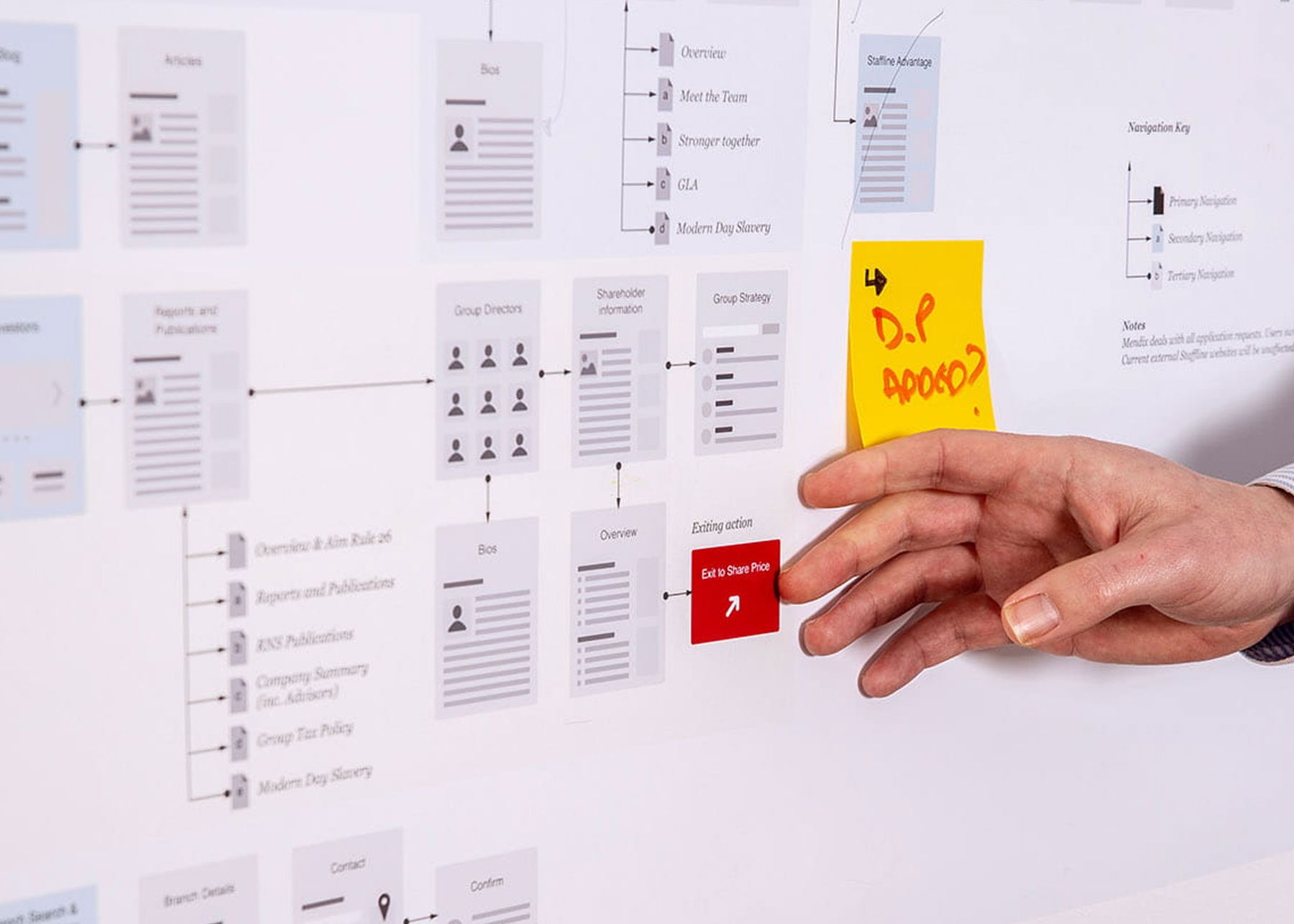
Looking before building isn’t new to us. Our work for Staffline included a six-week audit of the brand, focused on data and competitor analysis, then workshops with clients and candidates, and the results steered what we built. That was brand and website work, not an AI project. The habit is the same: find out first.
Worth knowing
The unofficial tools are the finding
What staff already use, and why, tells you more about where AI helps than any vendor demo.
Your data is probably readier than you fear
Drafting, summarising and research work from documents you already have. Clean data matters later, for bigger uses.
Nobody is fully ready
Waiting until you are means waiting for ever. The review shows what to fix first, and what can start anyway.
Questions people ask
What is an AI audit?
It means different things. Accountants use it for auditing with AI, and some firms mean testing an AI system for bias or security. If you mean finding out where AI would help your organisation, that’s this review.
How long does an AI readiness assessment take?
About three weeks from kick-off to playback, with around a day of your people’s time spread across it. Most of that is the interviews.
What does it cost?
We set out exactly what’s included, and the terms, before anything starts, once we know how many people and teams are involved. Ask us in the Intro, which is free.
How do we know if we’re ready for AI?
If you can name the tasks, know the tools in use and have a rule on data, you’re ready for a first use. The twelve questions above help, and they’re free. For data alone, Digital Catapult’s online Data Readiness Assessment, made for Innovate UK’s BridgeAI programme, scores five areas.
What’s the difference between AI readiness and AI maturity?
A maturity assessment scores how far along you are, usually against a set of stages. A readiness review asks the more useful question: what should you do next, and what has to be in place first?
Do we have to hire you afterwards?
No. The plan is yours, written so your own people, or anyone else, can carry it out. If you’d like help with what comes next, that’s AI consultancy.
Is it a GDPR or legal check?
No. We note where personal data goes into AI tools and point you to the ICO’s Guidance on AI and data protection, now under review after the Data (Use and Access) Act. We don’t take copies of personal data. Where something needs a legal view, we’ll say so.
What do you need from us?
A named owner, an hour at the start, five to eight people for half an hour each, a look at the tools and settings you use, and two hours of the leadership team’s time for the workshop.
Find out first
Tell us what you’d like AI to do for your organisation, specifically, and we’ll book a free Intro.