
In this article
A competitor analysis should inform a decision. Without one, it becomes a long spreadsheet of features, prices and follower counts, with a SWOT grid at the back, and nothing changes.
A useful one starts from the other end. It begins with a decision you have to make, looks only at what bears on that decision, and finishes with a short list of things you will do differently. That is the method here.
Start with the decision
Before you open a single competitor's website, write down what the analysis is for. A rebrand, a new website, a pricing review, a content plan, a move into a new market. Each one needs a different look at the field.
A new website needs to know how competitors explain themselves and what proof they show. A search plan needs to know which pages rank for your searches, and why. A rethink of your positioning needs to know what everyone already claims, so you can find what only you can say.
A one-line question keeps the work honest. "Why do we lose to firms with a weaker offer?" is a good one. "What are our competitors doing?" is not, because it has no end.
Decide who counts as a competitor
Most organisations start with the names they already know. That list matters, but it is only one of three.
- The ones you would name. The firms you meet in pitches, see at events or hear about from customers.
- The ones search puts you against. The pages that rank for the searches your customers use. These are often not the firms you would name, and sometimes not your kind of organisation at all: a directory, a comparison site, a trade body.
- The options your customers actually weighed. Another provider, yes. But also an in-house team, a cheaper workaround, a different cause, or doing nothing. For many decisions, staying put is the strongest competitor there is.
Then narrow it down. Five or six is usually enough to see the pattern; thirty spreads the effort too thin.
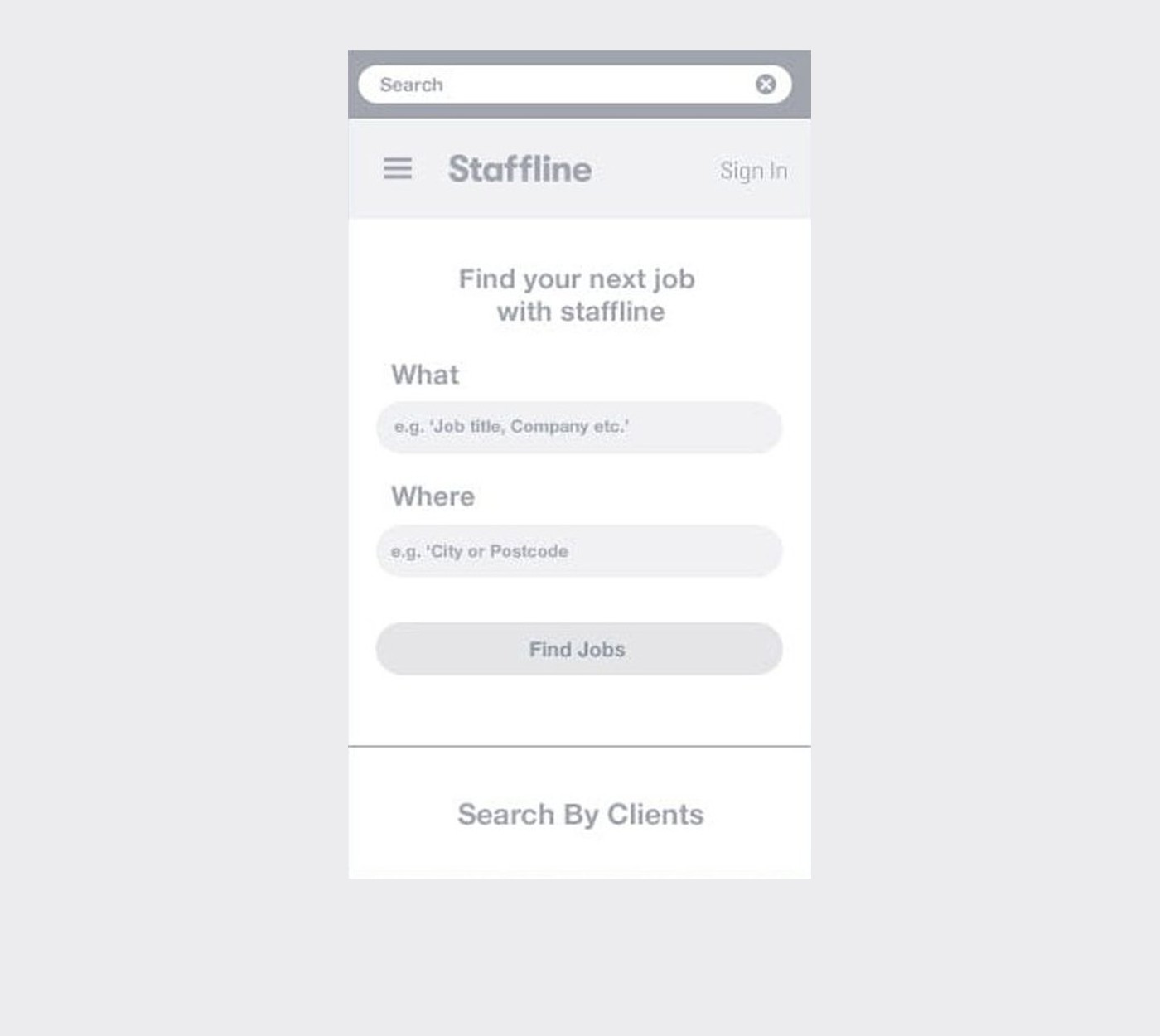
Choosing well also means being specific. When we worked with Staffline, the UK's largest provider of blue-collar recruitment, candidates were struggling to find its jobs through search engines. A six week audit of the brand, focused on data and competitors, came first, then workshops with clients and candidates. The SEO strategy that came out of it aimed at competitors with a similar proposition or a similar presence online.
Look at the case they make, not just the features
The usual checklist covers products, prices, social channels and advertising. Those are worth a look, but they rarely explain why one competitor wins and another does not. What explains it is the case each one makes to the person choosing.
| Look at | Where to find it | What it tells you |
|---|---|---|
| The claim | Homepage headline, first paragraph, sales material | What they want to be chosen for |
| The proof | Case studies, named clients, reviews, figures with sources | Whether the claim is believable |
| The path to contact | Enquiry forms, phone numbers, what happens next | How much effort they ask of a buyer |
| The pages that rank | The results for your most important searches | What search rewards in your market |
| The gaps | Questions nobody answers well | Where you could be the clearest voice |
Two habits make this sharper. Judge the page, not the brand behind it: a big name is not always a threat on a given search. And write down what you can see. "Their service page has a comparison table and three recent case studies" is useful. "They are stronger online" is not.
Read the claims side by side and most of the market usually says the same few things. That tells you which words will not set you apart, however true they are. There is more on this in marketing to a sceptical buyer.
Ask the people who chose
Desk research shows you what competitors say. It cannot show you what worked on the person choosing. For that, you have to ask.
Talk to recent customers, and if you can, to people who looked at you and went elsewhere. Ask about a real decision: what else they considered, what made them hesitate, what tipped it.
At Bush & Co, a full brand audit looked at its positioning, its competitors and its marketplace. Then we interviewed the solicitors and insurers who choose it, asking how and why they used Bush, what helped and what got in the way, and what made them pick Bush over other companies. Three themes kept coming back: the quality and personality of the case managers, the need to find a consultant simply, by geography first, and a natural caution about trying someone new. No competitor's website would have told us any of that. It shaped the brand and a map-led consultant finder.
A handful of honest conversations is often enough. What good discovery actually looks like covers how to run them.
Read it alongside what you already know
Competitor analysis works best as one source among three: what the organisation believes, what the data shows, and what customers say. Here the data tells you who you are up against; the customers tell you who you were really weighed against.
At Cambourne, the market had grown more competitive and the identity was ten years old. We started with workshops and a client survey on what the company stood for, what it offered and how its clients saw it, with competitor and marketplace analysis alongside. What came out was a clear structure for its services and how to explain them. The competitor work was one input, not the whole answer.
Turn it into decisions
Sort everything you found into three lists.
- 01Answer
Things a competitor does that your buyers clearly value and you do not. A comparison table, a clear price range, a named contact. Decide which you will match, and by when.
- 02Borrow
Good practice that is not anyone's property. A plain explanation of what happens after an enquiry, or case studies with real detail. Use the idea, not the words.
- 03Ignore
Searches, channels and claims that are not worth the fight. A competitor with a far bigger budget may own a broad search; the narrower one beside it may be yours to take.
- 04Choose the first move
Pick the one or two changes that bear most on the decision you started with, and give each an owner.
- 05Look again later
Note what you would expect to change if you are right, and check it in a few months.
If the three lists are empty, check whether you chose the right competitors and gathered enough evidence. If you did, look again at your own offer, your message or your website.
Signs it has gone wrong
- Every competitor is described, and none is ranked by threat.
- The only sources are competitors' own websites.
- Estimates of other people's traffic are presented as facts.
- It ends in a SWOT grid and nobody can say what changes next.
Where to start
Write down the one decision this analysis has to inform. Name five competitors across the three lists, including at least one option that is not a competitor at all. Then ask three recent customers what else they considered and why they chose you.
That is how we approach it ourselves. Competitor and market research sits inside our brand strategy and customer research work, and inside the way we plan SEO. If you would like help with yours, get in touch.
Common questions
How often should you do a competitor analysis?
A light look every quarter keeps you aware of what has changed: new pages, new claims, new names on the searches you care about. A full analysis earns its place before a big decision, such as a rebrand, a new website or a move into a new market.
Is a SWOT analysis the same as a competitor analysis?
No. A SWOT is a way of summarising what you found: strengths, weaknesses, opportunities and threats. It is useful at the end, but it does not tell you who to look at, what to look for or what to do next.
How many competitors should you include?
Usually five or six, drawn from the three lists: the ones you would name, the ones that rank for your searches, and the options your customers actually weighed. Fewer, studied properly, beats many skimmed.
Can you see a competitor's website traffic?
Only as an estimate. Third-party figures can be badly wrong, so treat them as a rough guide and say so wherever you use one. Your own numbers come from your own analytics and Search Console.