
In this article
AI in marketing means using AI tools to help research, plan, make and measure marketing. The useful question is which parts of the work it should do, and which it should leave alone.
What AI in marketing actually covers
Two kinds of AI turn up in marketing. The first is the AI assistant you type into: it drafts, summarises, rewrites and answers questions. The second arrives inside software you already use, in ad platforms, email tools and customer databases, where it sorts audiences, predicts behaviour and tests versions.
Both are useful. Neither knows your customers, your reputation or what you are prepared to promise. That gap is where the human part of marketing sits.
Where it helps, job by job
| Marketing job | Where AI helps | What stays human |
|---|---|---|
| Research | Reading and sorting large amounts: reviews, survey comments, competitors' pages, search data | Choosing who to talk to, asking the questions, hearing what was meant |
| Insight | Grouping themes across notes and flagging what came up most | Judging which finding matters, and checking each pattern against what was said |
| Positioning | Listing options, testing an argument, playing the sceptical buyer | Deciding what to stand for, and what to give up |
| Content and creative | First drafts, variations, summaries, versions for each channel | The idea, the voice, and every fact and claim |
| Targeting and testing | Sorting audiences, running variants, spotting patterns in response | Deciding who you are for, and what you will not do to reach them |
| Measurement | Drafting what the numbers mean in plain English | Where the figures come from, whether one is wrong, and what to do next |
The pattern is the same in every row. AI takes the legwork. A person makes the call.
Research: more reading, the same listening
AI can read far more than any team has time to. Every review, every open survey answer, every competitor's service page, sorted into themes. That is real help, and it changes what a small team can cover.
What it cannot do is sit with a customer. When we rebuilt the brand for Bush & Co, the UK's largest provider of case management and expert-witness services for catastrophic injury, we interviewed the solicitors and insurers who choose them. We asked how and why they used Bush, what the pains and gains were, and what made them pick Bush over others.
Three themes came back. Case managers came first: relationships were built on the quality and personality of the consultants. Solicitors were cautious by nature and needed a push to try someone new. And they searched overwhelmingly by geography first, which is why the new website was built around a map-led consultant finder.
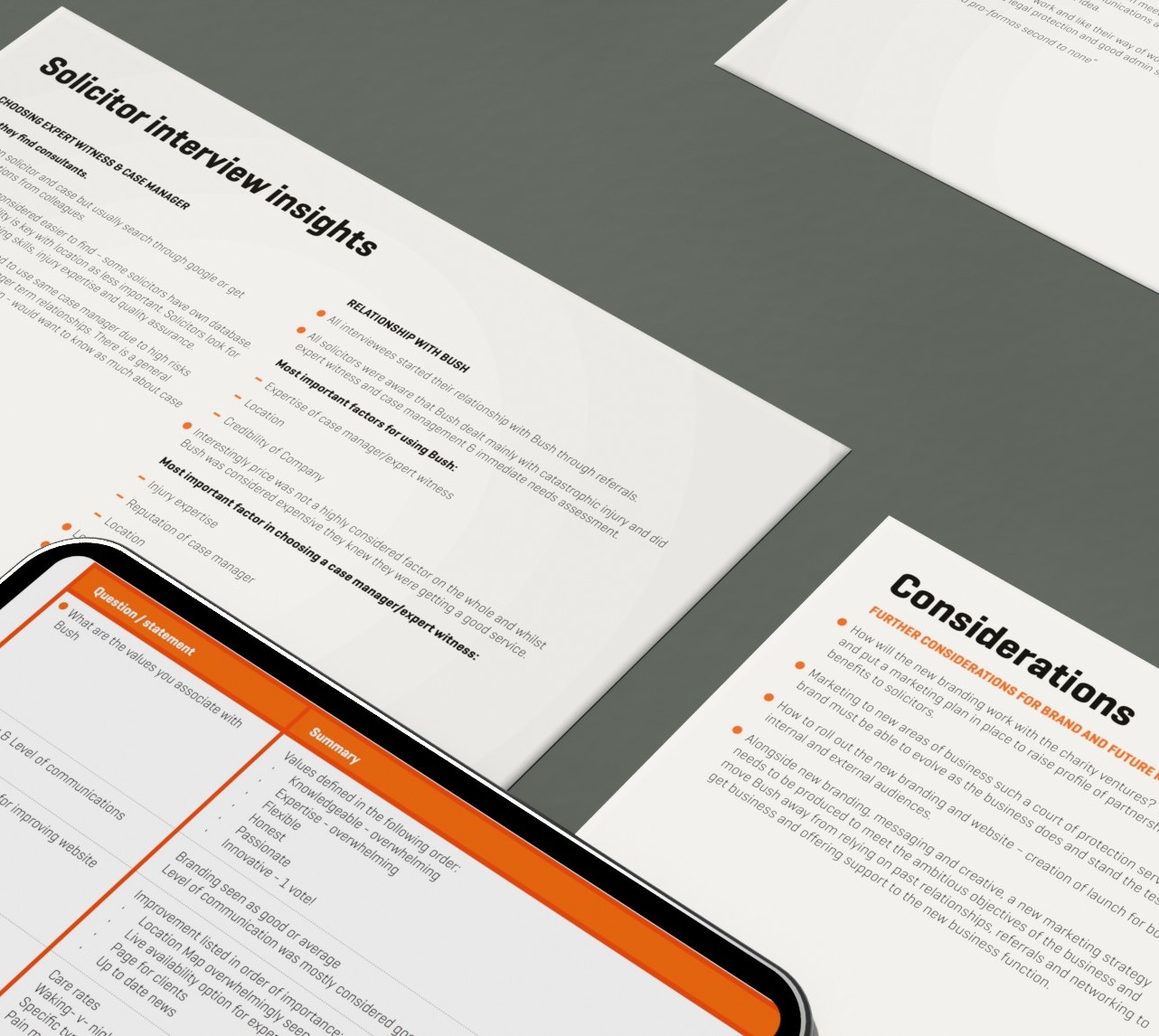
These findings came from interviews. A tool can help you read across the notes afterwards and check nothing was missed. The conversation itself, and the judgement about which finding matters, stays with a person.
What I'm proudest of on Bush & Co is that nothing was guessed.
There is more on running that kind of research in customer research and what good discovery actually looks like.
Content: drafts are cheap, claims are not
AI has made a first draft easy to get. It has not made a wrong claim any cheaper. Two problems follow.
The first is invention. AI tools can state things that are not true, with complete confidence: a figure, a quote, a feature you do not offer. In marketing, that becomes a promise in your name. The safe rule is ours: every fact traces to your own material or a named source, and anything that cannot is flagged before it goes anywhere. No figure, quote or claim made up to fill a gap.
The second is search. Google's position is plain. "Appropriate use of AI or automation is not against our guidelines," it says, but using automation, including AI, to generate content mainly to manipulate rankings breaks its spam policies. So the test is not who wrote a page. It is whether the page helps. The content that actually earns citations covers what that looks like, and how AI search chooses its sources is in what AI search means for your website.
The sameness problem
Marketing works partly by being different. Positioning is choosing a place in people's minds that nobody else holds. A draft from an AI tool has no view on where that place is.
So use AI to know more before you decide, not to decide. Let it gather what customers say, what competitors claim and where the gaps are. Then make the choice yourself, from evidence, and write it in your own voice. What is brand positioning? covers how to find a position worth holding.
A simple check: if a competitor could publish your draft unchanged, it is not finished.
Measurement: know where AI is not needed
Some of the best use of AI is deciding where to leave it out.
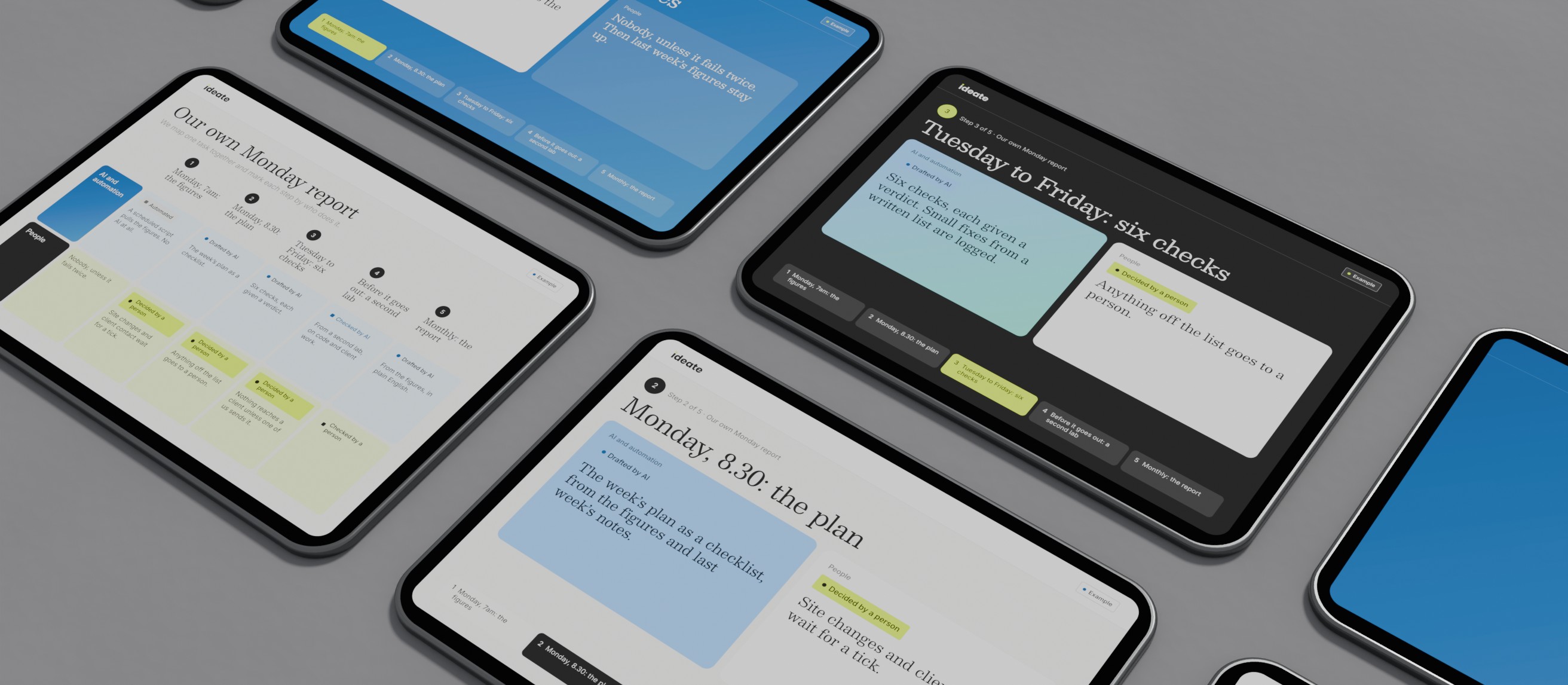
Our own weekly reporting is a useful example. At 7 each Monday, a plain scheduled script pulls Search Console, Analytics and tracked rankings for the sites we look after. No AI is involved, because a number that must be exact should come straight from the source. AI then drafts what the figures mean in plain English, and a person reads every report before it goes.
We also have AI work checked by a system from a different lab.
The principle carries to any marketing team. Keep the figures you report on close to where they were measured. Let AI help explain them. Keep the decision about what to do next with someone who knows why the number moved. More on how we report is on SEO reporting.
The rules still apply
In the UK, the advertising codes have no AI-specific rules, and there is no blanket requirement to say an ad used AI. The Committee of Advertising Practice puts the main point plainly: "our existing rules apply regardless of how content is generated, edited, or targeted."
It adds that "disclosure alone is very unlikely to mitigate the harm caused by a fundamentally misleading message." An image or claim that shows something your product or service does not deliver still misleads, with or without a label.
Data needs the same care. What goes into an AI tool, especially anything about customers or staff, should be agreed in writing before anyone starts. If you work in a regulated sector, or a campaign sits near the line, take legal advice. This guide is not that.
Five questions before AI touches your marketing
- 01Who has listened
Is there evidence from real customers, supporters or service users behind this, or only what was already written down?
- 02Could a competitor publish it
If the draft would fit their website unchanged, it needs your point of view.
- 03Does every fact have a source
Each figure, quote and claim traces to your own material or a named source.
- 04Where did the number come from
Figures you report on come from where they were measured, not from a summary.
- 05Who signs it off
One named person reads it and stands behind it before it goes out.
How we use AI in our own client work is set out on our AI marketing page. If you would like a second pair of eyes on your marketing, get in touch.
Common questions
How is AI used in marketing?
Possible uses include reading and sorting research, drafting and varying copy, sorting audiences, testing versions and explaining figures. The decisions that make marketing work, who you are for, what you stand for and what you claim, are best kept with people.
Is AI-written content bad for SEO?
Not in itself. Google says appropriate use of AI is not against its guidelines, and that content made mainly to manipulate rankings breaks its spam policies however it was produced. A page that answers a real question well, with facts you can stand behind, is what counts.
Do you have to say an ad was made with AI?
In the UK there is no blanket rule that you must. The advertising codes apply whatever made the ad, and the regulator says a disclosure is very unlikely to fix a misleading message. If you are unsure about a particular campaign, take advice.